Climbing to the top of Mount Kilimanjaro is both a thrilling and rewarding experience that offers offers spectacular views and a great sense of achievement. However, high altitudes have some physical and health challenges and it is important to take precautions.
Before the trip
Being safe climbing Kilimanjaro doesn't start on the mountain itself, but before the trip even begins. Here are some things to consider before you
Pick a reputable tour operator
First and foremost, being safe on Kilimanjaro means picking the right tour operator to guide you on your journey.
There is a strong correlation between the higher prices of tour operators and the quality, however there are exceptions.
Choosing the right tour operator also means making a decision about the kind of "footprint" that you will leave behind long after you leave.
Be wary of very cheap tours, as these are much less likely to have the most experienced mountain guides (which are valuable in emergency situations and in general) and may not place an emphasis on the quality of equipment, which is critical for a comfortable stay in the tough mountain conditions.
The last thing you want is to be sleeping in an old tent with holes in it and feeling unsafe.
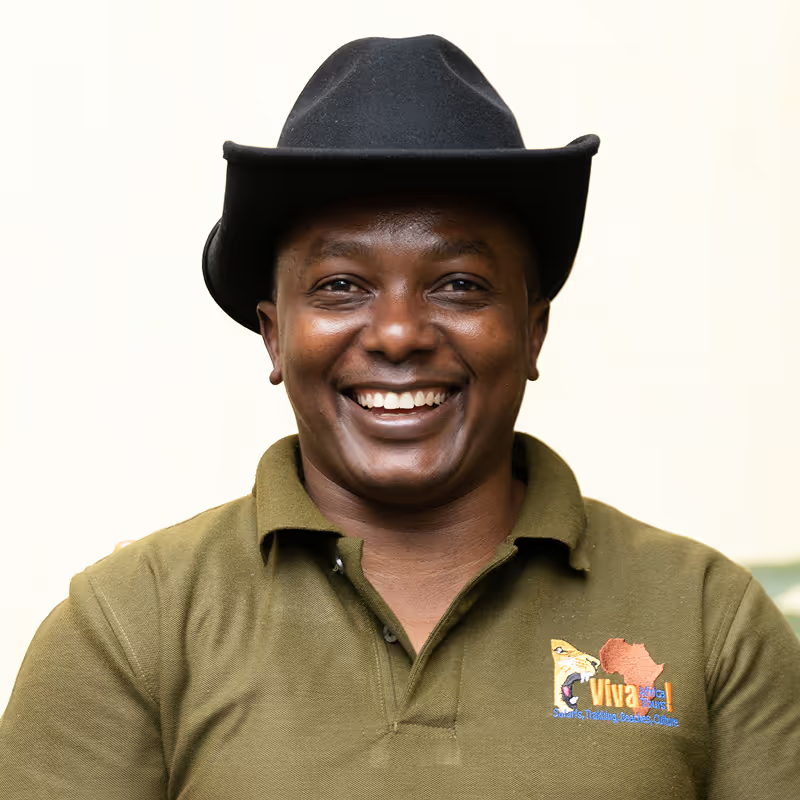
Viva Africa Tours is a reputable operator with over 13 years of experience offering tours and have helped thousands of people get to the top of Mt Kilimanjaro. We
Picking a reputable tour operator also means that you can feel good about your trip and n
Pick the right season to summit Kilimanjaro
It is best to avoid a summit of Kilimanjaro in the rainy seasons (DATES), this is due to heavy rainfall and reduced visibility. These are not the conditions that you want to climb a majestic mountain like Kilimanjaro.
It is recommended to book in XXXX
Picking the right route
Kilimanjaro has a number of different routes to follow, each with its own unique challenges. Some routes are naturally longer than other and some shorter, the constant is Kilimanjaro itself. The amount of altitude gain remains the same.
Longer routes provide the opportunity to acclimatise over a longer period of time. Shorter routes will of course mean a higher elevation gain in a shorter period of time.
The best routes for beginners are XX and the Northern Circuit routes, these give the optimal amount of time to acclimitise to the high altitude and have
Lemosho route
Marangu route
Northern circuit
- has the best acclimatisation profile
ROUTE 4
Bring the right equipment
Your equipment is one of the keys to successfully getting up
It is important to have tested all your equipment before you go on your trip, you shouldn't leave anything to chance. Trying out your brand new never worn hiking boots on Kilimanjaro itself is not the right approach.
Most of all, you should be comfortable with the gear you carry and it should be versatile enough to deal with a variety of weather conditions.
Use walking poles to walk on the rocky areas for better balance and to reduce physical impact off your knees, hips, ankles, and lower back.Make sure you stay hydrated all through, because sweating is generally more in higher altitudes.
Comfortable clothing is crucial. Try t bring
Wear comfortable clothing. Choose well-fitting shoes that provide ankle support, stability and grip. Carry gear for all types of weather in your backpack since it can change to both extremes. Pack rain- and windproof outerwear made of lightweight material, a hat and sunglasses. Wear sunscreen for protection from strong sun rays.
Physical preparation
Climbing Mt Kilimanjaro doesn't require technical climbing skills, which makes it a very attractive challenge for the non-hardcore hiker. It is one of the "easier" mountains to climb, but it is still important to be physically fit to tackle the conditions. Most people will find that the fitter they are, the easier it is to deal with the days of hiking and also
Of course, it isn't as difficult with the help of porters, but doing some long walks with a backpack are great training, even better if you can find a hilly area to do this in before your trip.
We recommend running, long walks and hikes to help you to be in the best condition possible before you get to Tanzania.
Being physically fit to climb will make the experience much more enjoyable.
How many kilometres/elevation gain is there on average per day?
See a doctor before you go
Seeing a doctor to make sure you are in good physical shape before tackling Kilimanjaro is an important consideration before hitting the slopes of Kili. It's important to identify anything that may hinder you from summiting our favourite mountain. A quick health checkup can help you to identify anything that may hinder you and it's always best to udnerstand this before climbing a mountain, where it may be too late.
During the ascent of Kilimanjaro
OK, now you have taken all the necessary precautions before your trip to ensure the best possible experience and chance of getting to the summit, there are a number of things to look out for when on the mountain.
Speak to your mountain guide
It's very important to communicate with your mountain guide about how you are feeling and if you have any concerns. Our mountain guides have a wealth of knowledge about Mt Kilimanjaro and are the ones that will help you safely get to the summit. If you have any concerns or feel unwell, you should let them know immediately to understand what you should do next.
Viva Africa Tours experienced guides are fully trained and know what to do in emergency situations
Hydration and food
At high altitudes, the demands on the body are completely different to being at sea level.
You may find that your appetite is suppressed when at altitude. The body needs a lot of calories to deal with the extra physical effort of climbing a mountain, so it is important to stay fueled, even though you may feel as though you are less hungry than usual. This will assist in acclimatising to the altitude, one mistake many beginner mountaineers make is eating far too little, making the journey to the summit of Kilimanjaro that much harder.
Staying hydated is also extremely important as your body is losing more water than normal through sweating and heavier breathing. It is a good idea to stay hydrated over the course of the days, drink a little bit often and avoid drinking too much at once. The best approach to hydration is to drink a little bit often, rather than a lot all at once. Remember that once you are thirsty, you are already in a mild state of dehydration!
Furthermore, it is very important to avoid alcohol and smoking as these can dehydrate you and make the acclimatisation periodeven more difficult and last longer. For those that are used to consuming these, it may pay to reduce consumption in the lead up to your Kilimanjaro hike to better adapt to the lower expected consumption when on the mountain.
Prevent altitude-related sickness
Preventing altitude sickness is easier said than done, as different people react differently to the high altitude based on a number of factors. Those that come prepared will have a much easier time dealing with the altitude, however it can happen to even the fittest among us.
The typical symptoms of acute mountain or altitude sickness are:
- Nausea
- Headache
- Fatigue
- Dizziness
- Drowsiness
- Insomnia
The mostimportant thing to do if you feel any of these symptoms is to speak to your guide, they will know what to do and can assess whether continuing on makes sense or not.
Some other altitude-related disorders include:
- High-altitude pulmonary edema (HAPE)
- High-altitude cerebral edema (HACE)
- Peripheral edema, which causes your hands, feet, and face to swell
- Altitude throat
- Altitude bronchitis
Acclimatization
Altitude is one of the biggest challenges on Kilimanjaro. As you climb higher, the amount of oxygen in the air decreases, which can lead to altitude sickness if your body does not adapt gradually. As we mentioned before, shorter routes mean more altitude gain over a shorter period of time and less of opportunity for the body to adapt.
The lack of oxygen in the high mountain air is particularly tough.
Acclimatisation is a fine art, you should pace your efforts when walking up the mountain, don't try to push. Stopping and resting are also important and Viva Africa Tours tries to stop for XX breaks per day.
Altitude-related illnesses are caused by a lower concentration of oxygen in the air at high altitudes. It’s important to take your time when climbing mountains with a high altitude and in Tanzania, people say ‘pole-pole’, which means ‘slowly-slowly’. You should walk slowly up the mountain in terms of speed and distance. Every stop on Kilimanjaro is a chance for you you to adjust to the altitude.
Take medication if necessary
Medication can help you to take in more oxygen and to acclimatize better to the high altitude. The best thing to do is to visit a doctor or a pharmacy to get some advice on the best medications for altitude sickness. These medications will also help to improve the quality of your sleep and breathing.
Descent
Upon noticing any altitude-related illness, it is advisable to descend immediately. Try to descend by 3,000 feet or more.